Form builder
A Typeform-style tool you own. Builders create forms, add questions (short and long text, email, number, single and multiple choice, date, a 1-5 rating, yes/no), publish them and share the link. Anyone can sign up and answer; the server function checks every answer (required, type, options) before it saves, and rules stop answers to closed forms or a second answer when a form takes one per person. Your own website's server can post submissions to a signed webhook, so a form on your marketing site lands in the same inbox. Each response notifies the builders and the form's notify address and emails the respondent a confirmation; forms close on their closing date; responses move from new to reviewed to archived, and every answer exports as CSV.
Builders are invited and build forms; respondents sign up to answer. Websites post submissions to a signed webhook.
What's inside
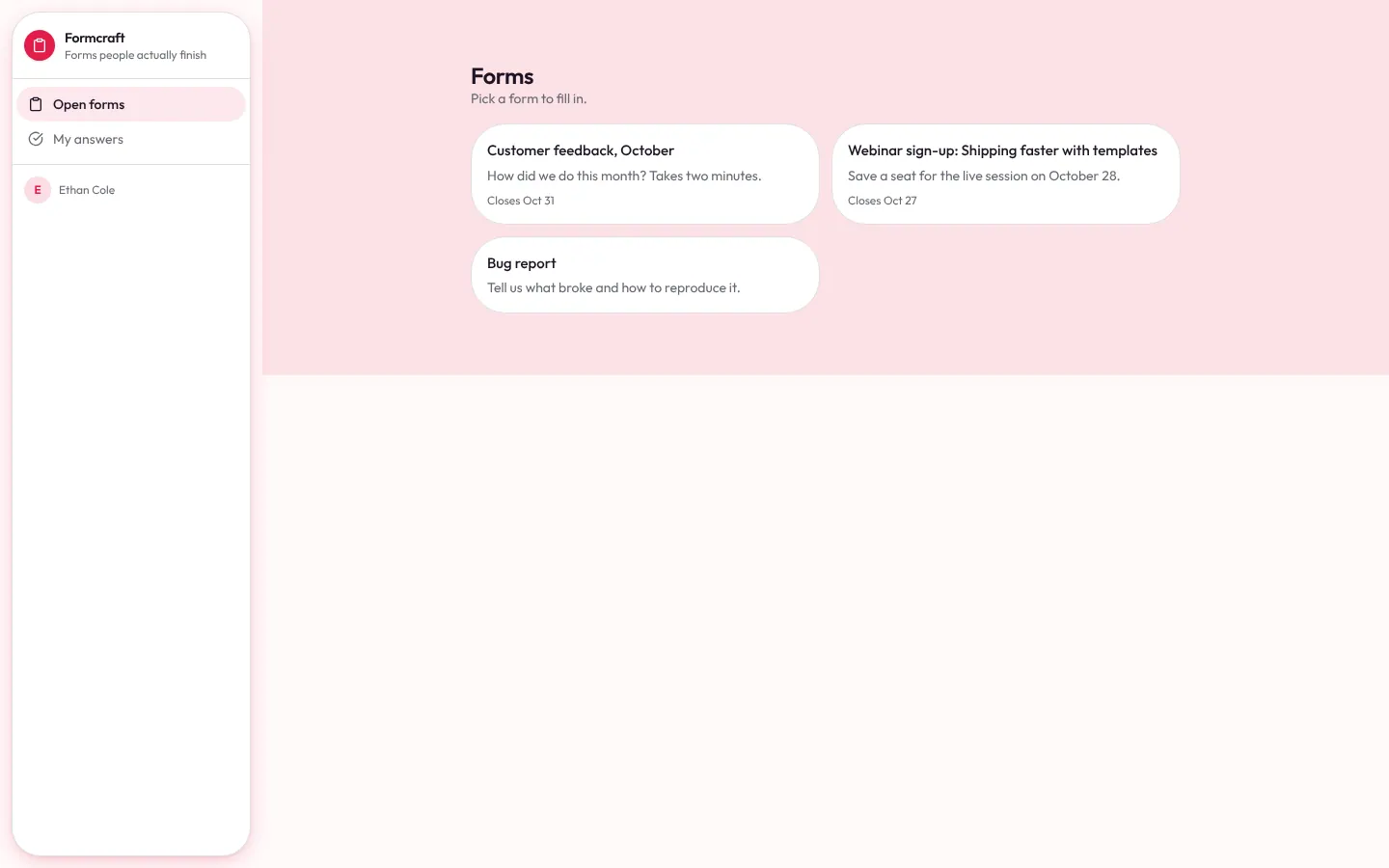
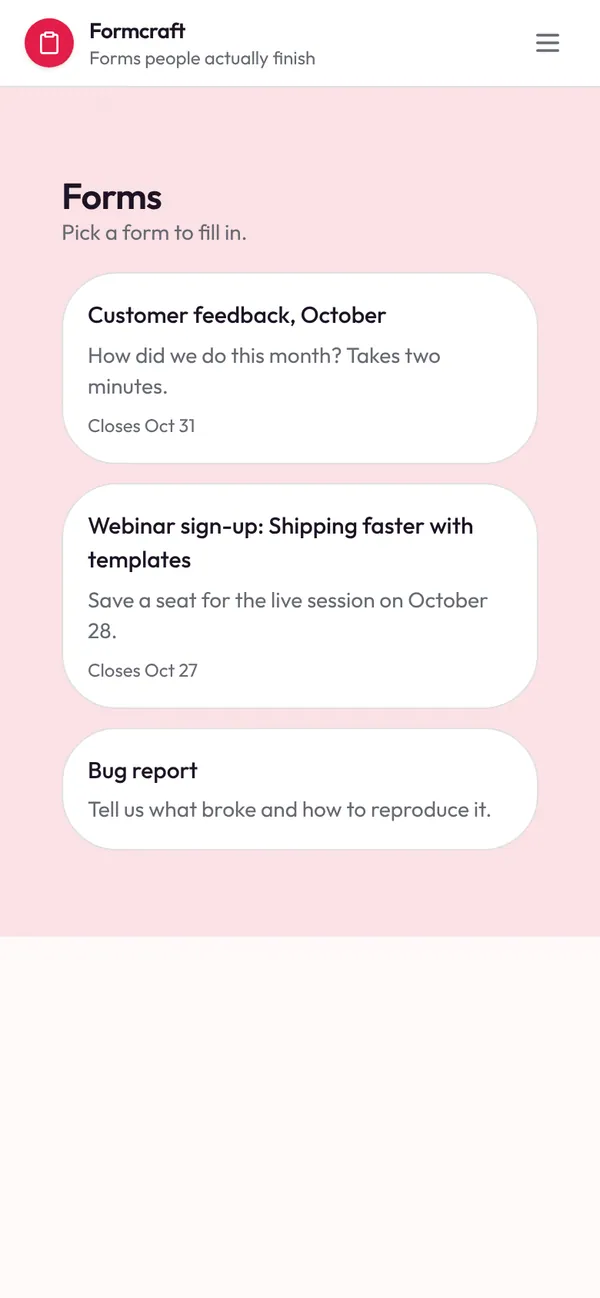
Forms page with counts, a form page with its questions, responses and share link. Questions grouped by form, nine question types. FormFill: the open forms and the form itself, with validation. Responses board (new, reviewed, archived) and table, response pages with answers. Answers table with CSV export.
Tables
respondentname, emailbuildername, email, teamformtitle, description, status, audience, accepts_multiple, closes_on, confirmation_message, notify_email, …fieldform_id, label, kind, width, required, options, help_text, positionresponseform_id, respondent_id, status, source, email, summary, submitted_at, noteanswerresponse_id, field_id, question, value
Roles
respondentRespondent, consumerbuilderForm builder, staff
Pages
/formsMy forms (builder)/fillOpen forms (respondent, builder)/my-responsesMy answers (respondent)/forms/:idForm (builder)/questionsQuestions (builder)/responsesResponses (builder)/responses/:idResponse (builder)/answersAnswers (builder)/peoplePeople (builder)/teamTeam & access (builder)/respondentsRespondents (builder)
Components
FormFillOpen forms to pick from, and the form itself: every question kind, required checks, a confirmationCsvExportDownload the rows of a table the viewer may see as a CSV file, with a preview of the first rows
Rules on every write
fieldChoice questions need optionsresponseThis form isn't taking answersanswerThat answer doesn't belong to this form
How its workflows run
Each one is a server workflow in your project: it runs on its trigger, with retries, and its runs show in the builder's log.
- Submit answers to a form
When the app calls it:
server function (respondent, builder). Then: Look up form, then Create response. - Website form submissions
When a webhook arrives:
webhook form-submission. Then: Look up form, then Create response. - Count and announce a new response
When a row changes:
response created. Then: Look up form, then Update form, then Notify, then Send email. - Give a published form its share link
When a row changes:
form updated, when status is published. Then: Update form. - Stamp the owner of a new form
When a row changes:
form created. Then: Look up builder, then Update form. - Close forms past their closing date
On a schedule:
schedule daily 00:30 over form. Then: Look up form, then Update form. - Weekly responses digest
On a schedule:
schedule weekly mon 09:00 over response. Then: Send email.
Set it up
It starts a new project, with its data, roles and sign-in ready.
- Start the project
Use the button above, or ask your coding agent with the Appbricx MCP server connected (quickstart).
- Sign in as each role
The demo logins open each role's home. Change what you like in plain words or in the contract.
- Deploy
When dev looks right, deploy. Production gets a snapshot first, so you can roll back.
Use it with your coding agent
The agent creates the project, builds it and signs in as each role.
Start a new Appbricx project from the Form builder template (slug "form-builder") with use_template. Call it "My Form builder", then sign in as each role, verify it and tell me what to change first.{
"tool": "use_template",
"arguments": {
"slug": "form-builder",
"name": "My Form builder"
}
}appbricx templates use form-builder --name "My Form builder"Goes well with
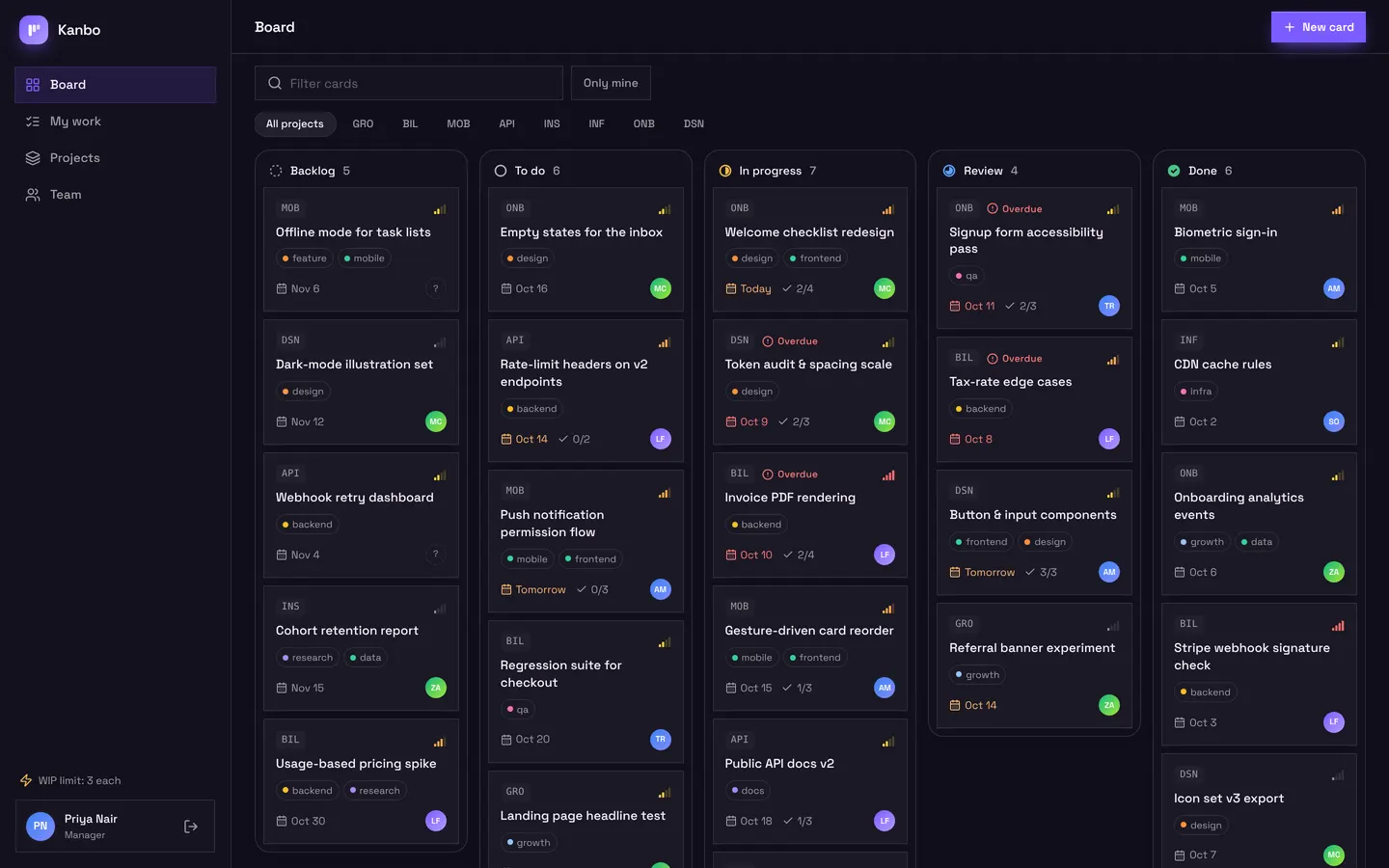
Kanbo
Team project board with drag-and-drop cards, checklists, comments and my work.
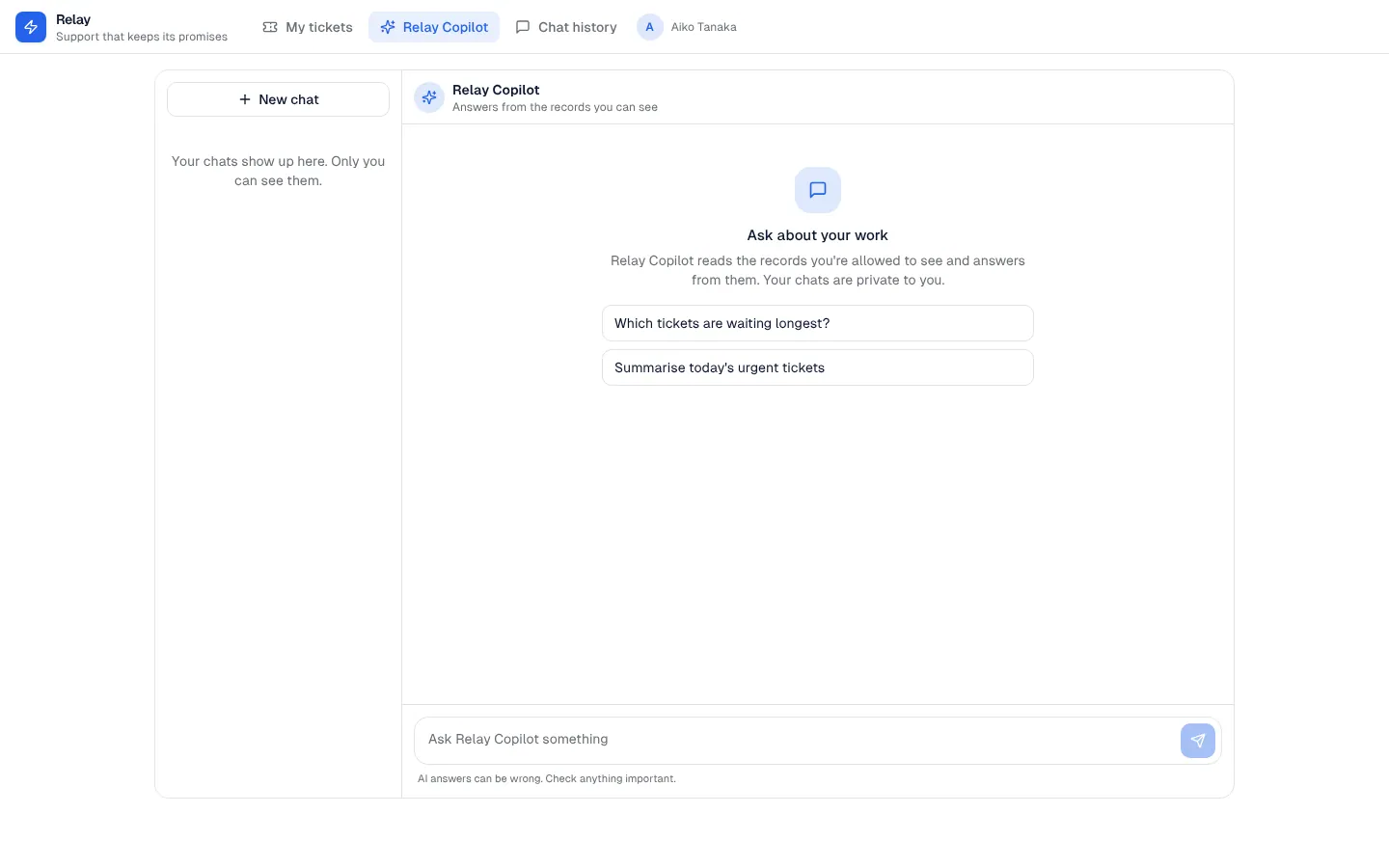
AI chat panel
A private AI assistant inside your app that answers from the records each person is allowed to see, with saved conversations.
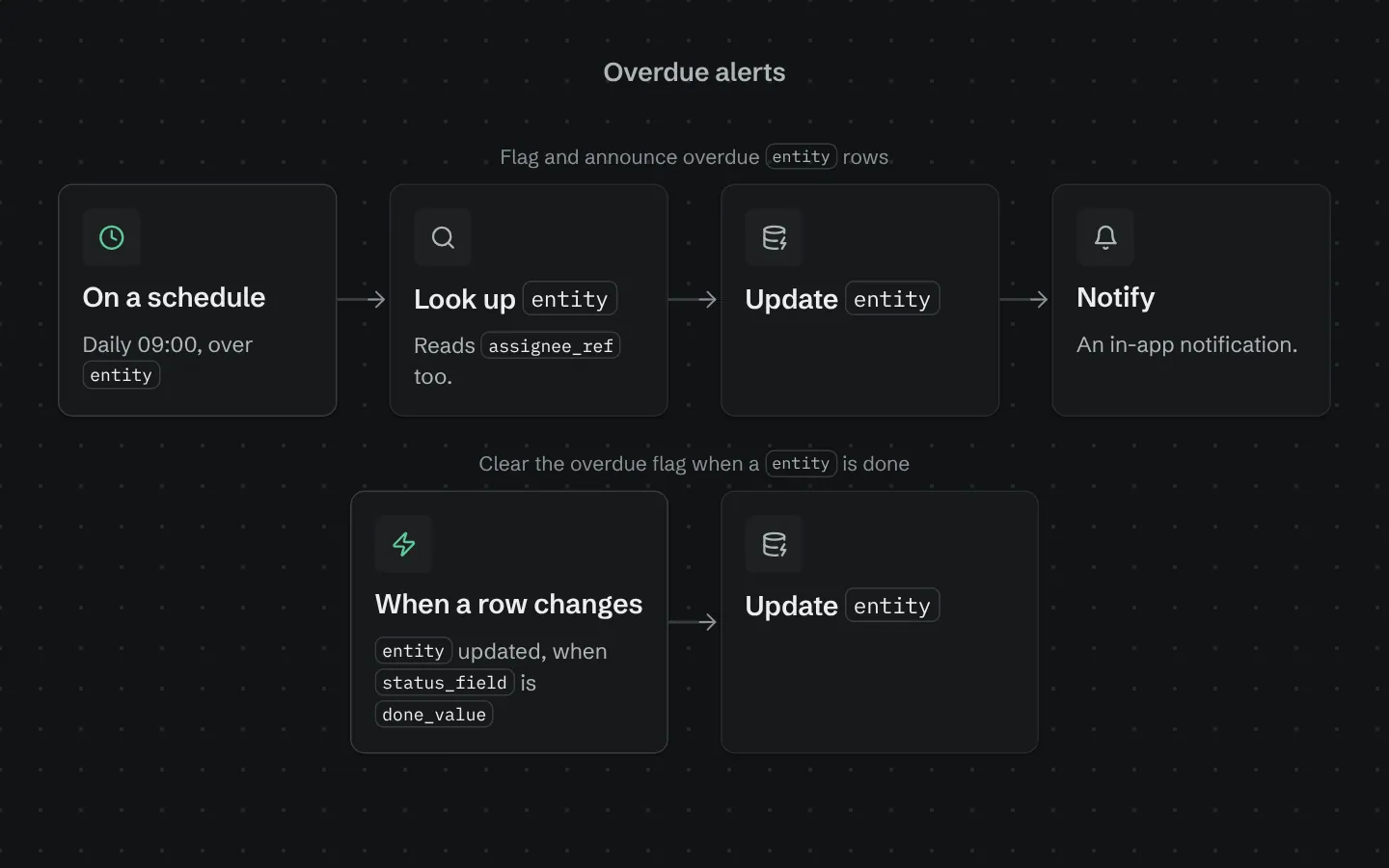
Overdue alerts
Each morning, flags rows past their due date, tells the person assigned and sends the team a list.